2019–present ·
Computational analysis of information environments
How can computational methods reveal narratives, coordinated behaviour and cross-media dynamics in different information domains?
Representation learning, semantic clustering and network analysis for understanding discourse across social media, news and radio in crisis and conflict settings.
The challenge
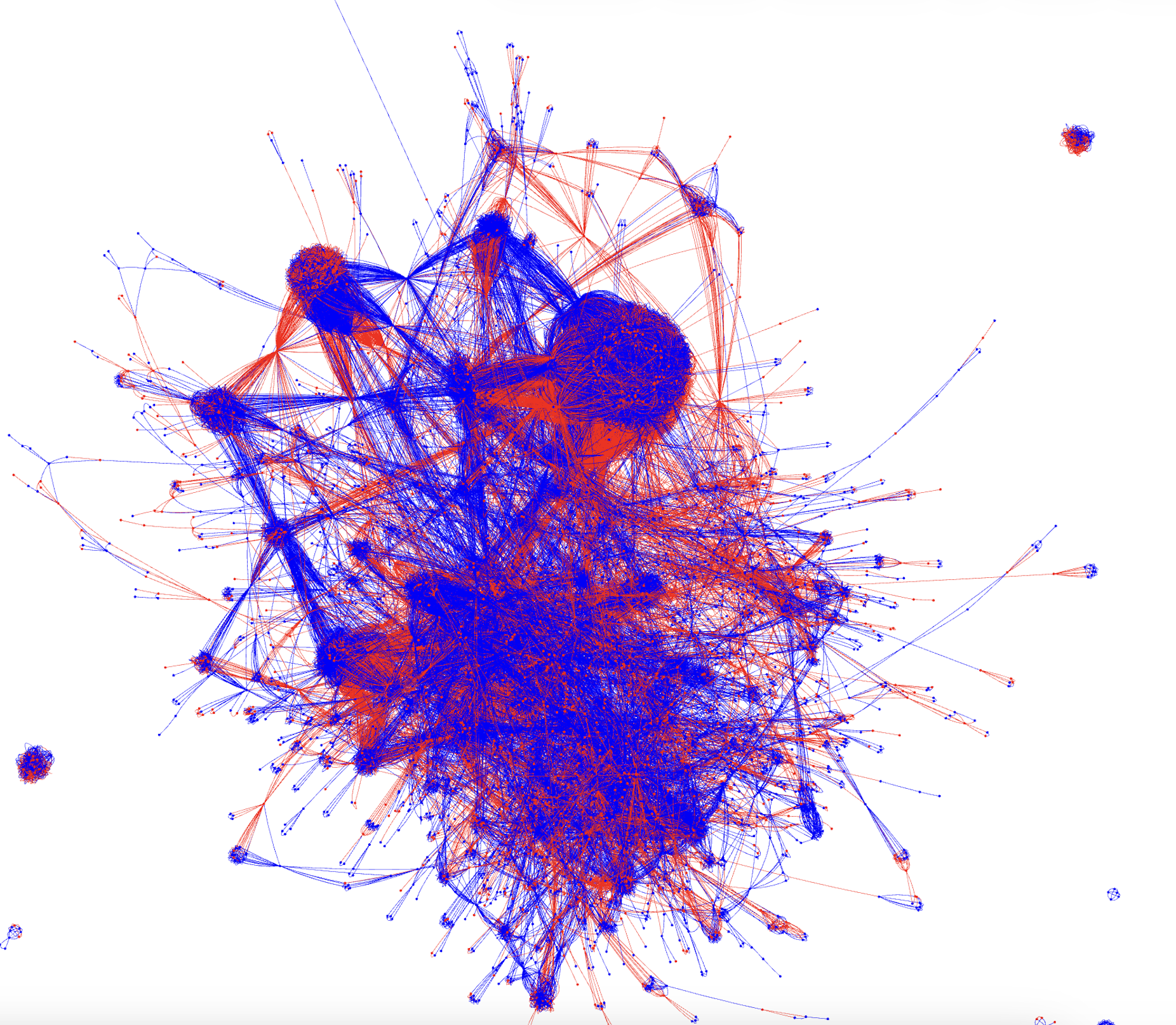
Societal dialogue, opinion, as well as disinformation and hate speech are spread through social media and radio broadcasts. Analysts may need to distinguish highly specific claims, understand how they move between communities and platforms, and identify patterns of coordination or amplification.
Research contribution
This work combines semantic representations, lightweight topic-discovery methods and network analysis. To generate localised semantic representations, we developed PRISM, which uses sparse large-language-model supervision to fine-tune a smaller, locally deployable encoder that can separate closely related topics without requiring repeated LLM calls during inference.
Within peacekeeping contexts, related methods have supported analysis of narratives and coordinated behaviour across social media and radio. These systems are designed around analyst workflows rather than assuming that automated classification can replace contextual investigation.
Selected outputs